

How to Choose the Right Paint for Your Kitchen
The kitchen is one of the busiest rooms in any Canadian home. Between cooking, cleaning, steam, grease, fingerprints, and everyday traffic, kitchen surfaces experience more wear and tear than most other areas of the house.
That is why choosing the right kitchen paint is about more than simply picking a colour you like. The right product, finish, and preparation can make your kitchen look better while helping the painted surfaces stay clean, durable, and attractive for years.
At Yellow Paint, we help homeowners choose painting solutions that balance appearance, durability, cleanability, and the unique demands of each kitchen.
1. Start With the Surface You Are Painting
Before choosing a paint, determine exactly what you are painting.
Kitchen walls, ceilings, trim, doors, and cabinets can require different products and finishes. A paint that works well on drywall may not be the best choice for cabinets or heavily used trim.
For example:
- Kitchen walls: Look for a durable, washable interior paint.
- Cabinets: Use a coating specifically designed for cabinetry or high-use wood surfaces.
- Trim and doors: A more durable finish can help resist fingerprints, scuffs, and repeated cleaning.
- Ceilings: A lower-sheen finish can provide a softer appearance and help minimize the visibility of imperfections.
Choosing the right kitchen paint based on the surface—not simply the colour—creates a more professional and longer-lasting result.
2. Choose a Washable, Durable Paint
Kitchen walls are exposed to food splashes, grease, moisture, and frequent cleaning. A quality washable paint makes it easier to remove everyday marks without damaging the finish.
Paint technology has improved significantly, and many modern interior paints are designed to provide strong stain resistance and easier cleaning. For kitchens, choosing a durable kitchen paint should be one of your primary considerations rather than selecting a product solely because it is inexpensive.
A good kitchen paint should provide:
- Easy cleaning
- Resistance to stains and everyday marks
- Good moisture resistance
- Strong adhesion
- Consistent colour
- A durable finish
The goal is to choose a coating that can handle real kitchen use while still providing the appearance you want.
3. Choose the Right Paint Finish
One of the most important decisions is the paint’s sheen, or finish.
The finish affects both the appearance and practical performance of the painted surface. Generally, higher-sheen finishes are easier to clean and more resistant to moisture, while very flat finishes are better at hiding minor surface imperfections.
Eggshell
Eggshell provides a soft, low-reflective appearance while offering more washability than a completely flat finish.
It can be a good option for homeowners who want an elegant, understated appearance without a highly reflective wall.
Satin
Satin is one of the most practical choices for kitchen walls.
It provides a subtle amount of sheen while offering good resistance to stains, moisture, and regular cleaning. It is particularly useful in kitchens that receive heavy everyday use.
Semi-Gloss
Semi-gloss offers greater durability, moisture resistance, and washability.
It is often a strong choice for trim, doors, mouldings, and other surfaces that need frequent cleaning. Because it reflects more light, however, it can make wall imperfections more noticeable.
High-Gloss
High-gloss finishes are extremely reflective and easy to clean, but they highlight surface imperfections more than lower-sheen finishes.
They can work well for selected cabinetry, doors, or architectural details when a bold, polished appearance is desired.
For many kitchens, satin on the walls and a more durable finish on trim and cabinetry provides an excellent balance between appearance and performance.
4. Think About Moisture and Steam
Cooking creates steam and moisture, particularly around sinks, dishwashers, kettles, and cooking areas.
This does not mean you need the glossiest paint available. Instead, choose a quality interior coating appropriate for areas exposed to regular moisture and make sure the underlying surface is properly prepared.
Good kitchen ventilation is equally important. Using an exhaust fan and allowing moisture to escape can help protect painted surfaces and the surrounding materials.
If your kitchen has a history of moisture problems, staining, or mould, the underlying issue should be addressed before painting. Simply applying a new coat of paint will not solve a moisture problem.
5. Consider the Colour Carefully
Colour has a major impact on how your kitchen feels.
Before choosing a final colour, consider:
- Natural daylight
- Artificial lighting
- Cabinet colour
- Countertops
- Flooring
- Backsplash
- Appliances
- Overall home design
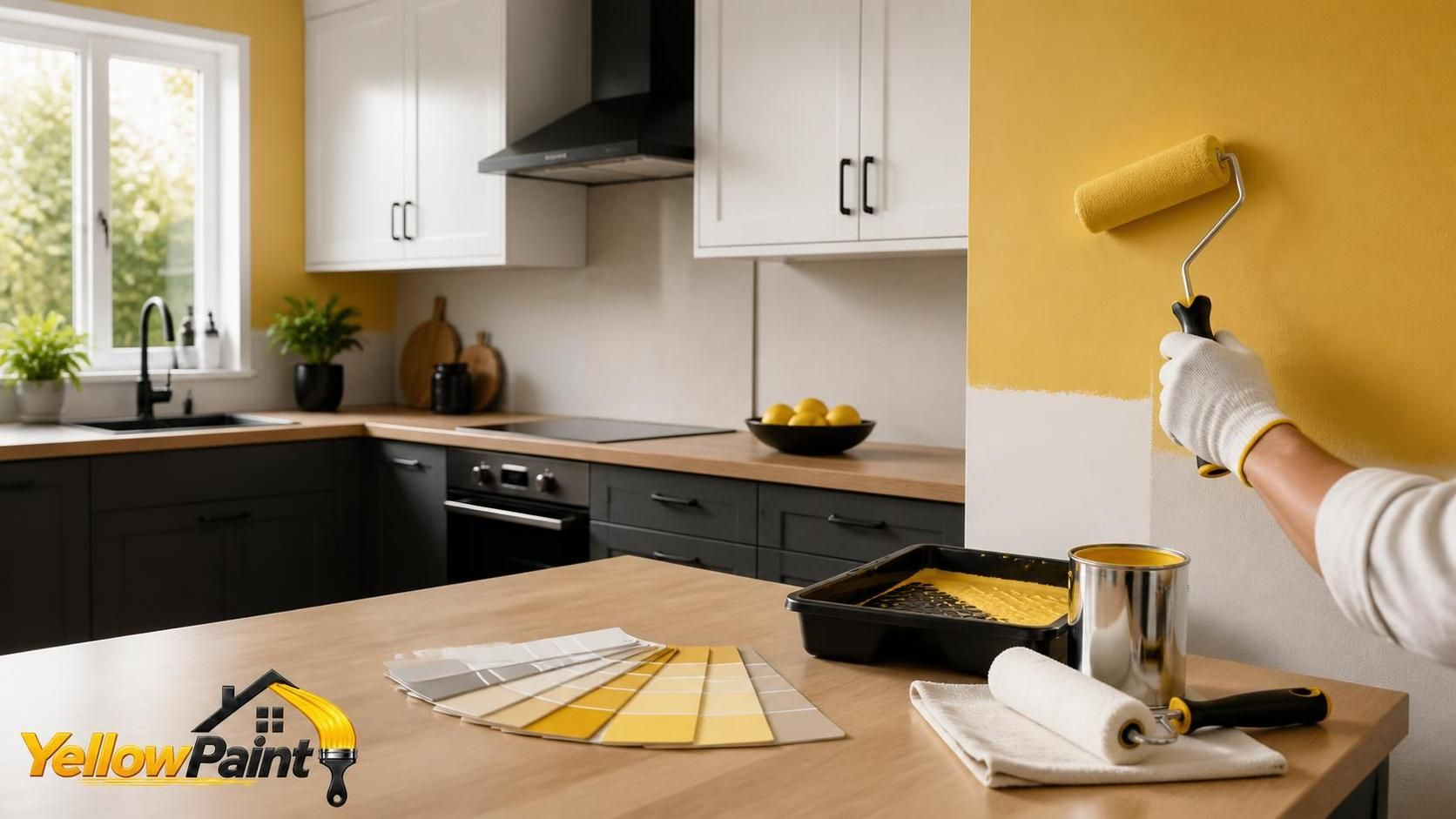
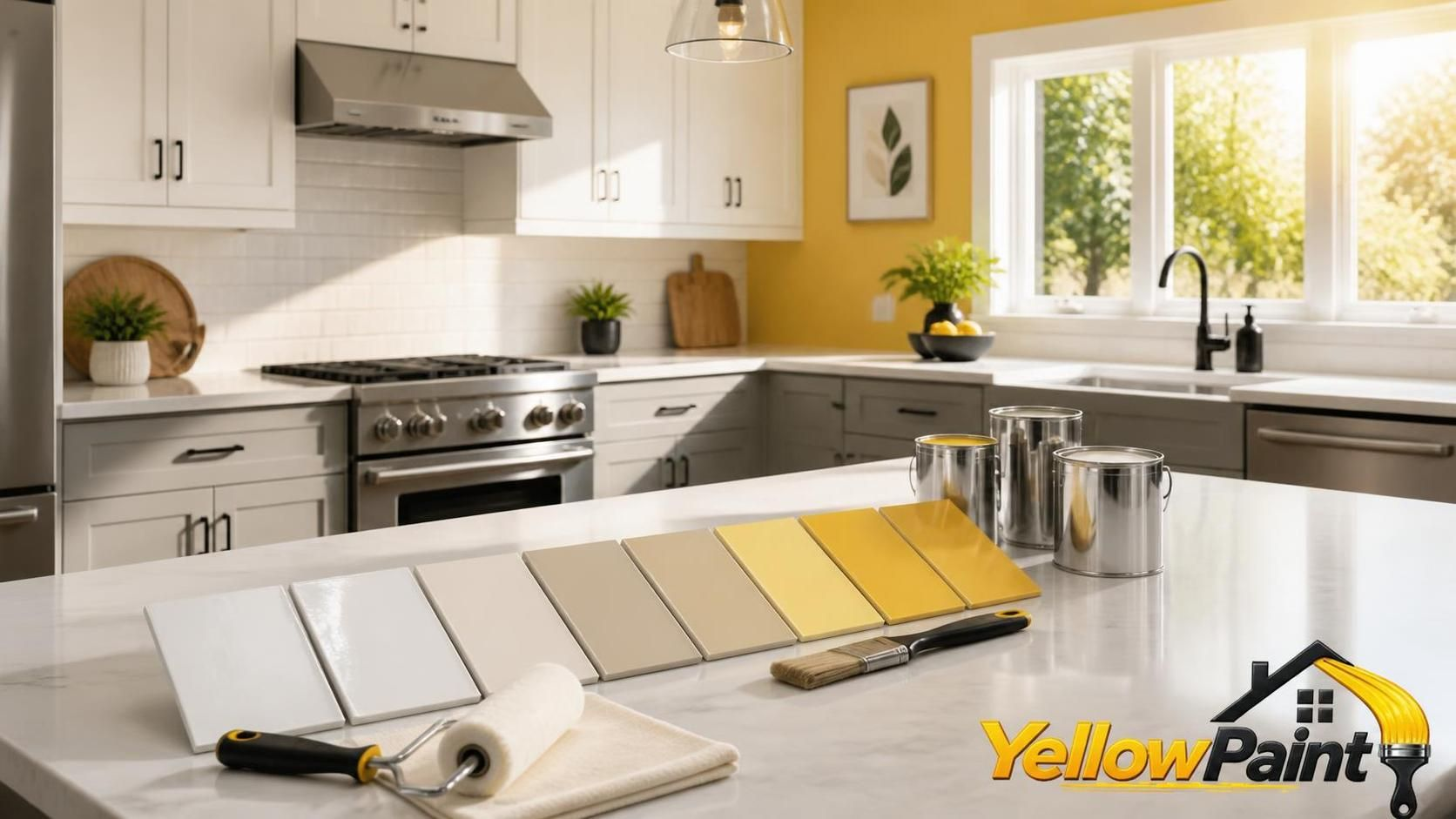
A colour can look very different depending on the amount and type of light in the room. Testing samples in several areas and observing them at different times of day is a smart way to avoid choosing a colour that looks different after the entire kitchen has been painted.
Light Colours
Whites, warm neutrals, soft greys, and other light tones can make a kitchen feel brighter and more spacious.
Dark Colours
Deep greens, charcoal, navy, and other darker colours can create a sophisticated and dramatic look. They work particularly well when balanced with lighter cabinetry, countertops, or strong natural light.
Warm Neutrals
Warm beige, cream, taupe, and greige can create a comfortable and timeless kitchen while working well with natural wood and contemporary finishes.
The best colour is not necessarily the most popular one. It is the colour that works with your kitchen’s lighting, materials, and overall design.
6. Don’t Paint Over Grease and Dirt
Even the best kitchen paint will not perform properly if it is applied over a contaminated surface.
Kitchen walls and cabinets can accumulate grease, cooking residue, dust, and other contaminants. These need to be properly removed before painting.
Professional preparation may include:
- Cleaning the surface
- Removing grease and residue
- Repairing holes, cracks, and damaged areas
- Sanding where required
- Priming specific surfaces when necessary
- Protecting countertops, flooring, appliances, and fixtures
- Applying the appropriate number of finish coats
Proper preparation helps the new coating adhere properly and creates a smoother, more uniform appearance.
7. Choosing Paint for Kitchen Cabinets
Cabinet painting requires a different level of attention than painting ordinary walls.
Cabinets are constantly touched, opened, closed, cleaned, and exposed to cooking residue. Their surfaces must therefore be properly cleaned, deglossed or sanded when appropriate, repaired, primed when required, and coated with a product suitable for cabinetry.
A professional cabinet finish should be:
- Durable
- Smooth
- Easy to clean
- Resistant to everyday wear
- Properly bonded to the existing surface
The preparation process is often just as important as the paint itself.
8. Don’t Forget About the Ceiling and Trim
A kitchen renovation can look incomplete if the walls are freshly painted but the trim, doors, or ceiling are neglected.
For a cohesive result, consider the entire room:
Walls: Durable, washable finish
Trim: More durable finish for frequent cleaning
Doors: Tough finish that can withstand repeated handling
Ceiling: Lower sheen for a clean, subtle appearance
Using different finishes strategically can create contrast while giving each surface the level of protection it needs.
9. When Should You Hire a Professional?
Painting a small kitchen may seem straightforward, but achieving a professional finish requires more than applying paint with a roller.
A professional painter understands how to:
- Identify surface problems before painting
- Select the appropriate coating for each surface
- Prepare greasy or previously painted surfaces
- Repair imperfections
- Create clean edges around cabinets and trim
- Apply consistent coats
- Protect countertops, flooring, and appliances
- Minimize dust and mess
- Deliver a uniform final finish
This is especially valuable when painting cabinets, changing from dark to light colours, or dealing with damaged or previously painted surfaces.
A Better Kitchen Starts With the Right Paint
Choosing the right kitchen paint is a combination of colour, finish, surface preparation, and durability.
Instead of choosing a product based only on its colour or price, consider how the kitchen is used and how much cleaning and daily wear the painted surfaces will experience.
At Yellow Paint, we take a professional approach from preparation to final coat. We help homeowners choose practical painting solutions that complement their kitchen while delivering a clean, durable, high-quality finish.
Planning to refresh your kitchen? Contact Yellow Paint today to discuss your project and get started with a professional kitchen painting service.

Comments (2)
Riva Collins
It’s no secret that the digital industry is booming. From exciting startups to need ghor
global and brands, companies are reaching out.
Oliva Jonson
It’s no secret that the digital industry is booming. From exciting startups to need ghor global and brands, companies are reaching out.