

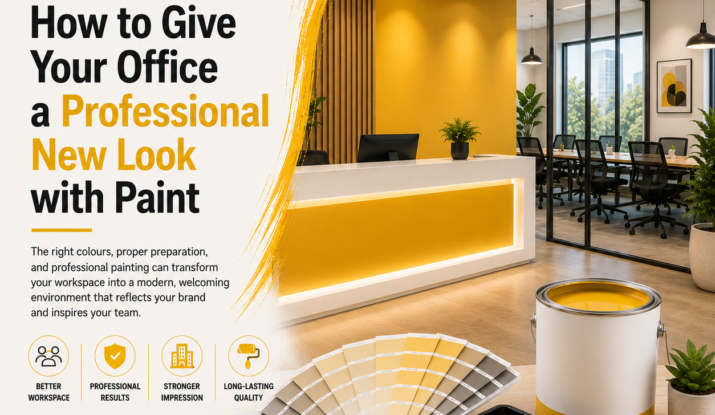
How to Give Your Office a Professional New Look with Paint
Your office is more than a place where people work. It is where clients form their first impressions, employees spend much of their day, and your brand becomes part of the everyday environment.
When an office begins to look dated, worn, or uninspiring, office painting can make a remarkable difference. The right colours, proper surface preparation, and a carefully planned painting process can give your workplace a cleaner, more modern appearance without requiring a major renovation.
Whether you are updating a small private office, refreshing a reception area, or repainting an entire commercial workspace, professional office painting can help create an environment that looks polished, welcoming, and aligned with your business.
Why Office Painting Matters
A freshly painted office can change the way an entire workplace feels.
Walls naturally collect marks, scuffs, dust, and signs of everyday use. Over time, even a well-maintained office can begin to look tired. Faded colours and damaged surfaces may make the space feel older than it actually is.
A professional office painting project can help:
- Create a stronger first impression for clients and visitors
- Give employees a cleaner and more comfortable workspace
- Refresh outdated interiors
- Reinforce your company’s brand identity
- Improve the appearance of reception areas and meeting rooms
- Protect walls from everyday wear and tear
- Make an older office feel more modern without a complete renovation
For businesses, painting is not simply about changing the colour of a wall. It is an investment in the appearance and functionality of the workplace.
1. Choose Colours That Match Your Business
Colour should be one of the first things considered when planning an office painting project.
The best colour is not necessarily the trendiest one. It should work with the purpose of the room, your existing interior, your branding, lighting conditions, and the atmosphere you want to create.
Neutral Colours for a Professional Environment
Soft whites, warm neutrals, light greys, and beige tones can create a clean and professional appearance. These colours are particularly useful for offices where you want the space to feel open, organized, and timeless.
They can also provide a flexible background for furniture, artwork, signage, and company branding.
Blue and Green for Calm Workspaces
Cooler tones can work well in areas where concentration and a relaxed atmosphere are important.
Soft blue and muted green can add colour without overwhelming the room. These shades can be especially effective in private offices, meeting spaces, and areas designed for focused work.
Accent Colours for More Personality
An accent wall can introduce stronger colour without making the entire office feel too intense.
A carefully selected accent colour can be used behind a reception desk, in a conference room, or on a feature wall. It can also be coordinated with your company’s existing brand colours.
The key is balance. Commercial interiors generally benefit from a colour scheme that looks intentional rather than overly busy.
2. Consider Your Brand Identity
Your office should feel like an extension of your business.
If your company already uses specific colours in its logo, website, signage, or marketing materials, those colours can influence the interior design.
However, using your exact brand colour on every wall is not always the best solution.
A more professional approach may be to use neutral colours as the primary palette and introduce your brand colour selectively through:
- Accent walls
- Reception areas
- Feature sections
- Interior doors
- Architectural details
- Signage backgrounds
This creates a connection between your physical workplace and your overall brand without making the office feel like a large advertisement.
3. Don’t Skip Surface Preparation
One of the biggest differences between an average paint job and a professional finish is what happens before the paint is applied.
Walls should be inspected carefully for cracks, nail holes, dents, stains, peeling paint, and other imperfections.
Depending on the condition of the surface, preparation may include:
- Cleaning the walls
- Removing loose or damaged paint
- Filling holes and cracks
- Sanding repaired areas
- Priming where necessary
- Protecting floors, furniture, and fixtures
- Preparing trim, doors, and other surfaces
Professional painting contractors understand that paint cannot hide every surface problem. A smooth, properly prepared surface provides a much better foundation for the final coating.
4. Select Paint for a Commercial Environment
Office walls experience more wear than many business owners realize.
Employees, customers, chairs, equipment, cleaning routines, and everyday activity can leave marks on painted surfaces. For this reason, selecting paint solely based on colour or price can be a mistake.
Commercial office painting projects often benefit from coatings that provide:
- Good durability
- Washability
- Consistent coverage
- Appropriate sheen
- Low odour
- Resistance to everyday scuffs and cleaning
The right product depends on the room and how heavily it is used.
For example, a quiet private office may have different requirements from a busy hallway, reception area, staff room, or shared workspace.
5. Think About Lighting Before Choosing a Colour
A colour can look completely different depending on the lighting in the room.
Natural daylight, LED lighting, fluorescent fixtures, and warm artificial light can all affect how a paint colour appears.
Before committing to a colour throughout the office, it is a good idea to view samples in the actual space and at different times of the day.
Consider:
- How much natural light enters the room
- The direction of the windows
- Existing ceiling and floor colours
- Artificial lighting
- Furniture and finishes
- The size of the room
A colour that looks excellent in a showroom may produce a very different result under your office lighting.
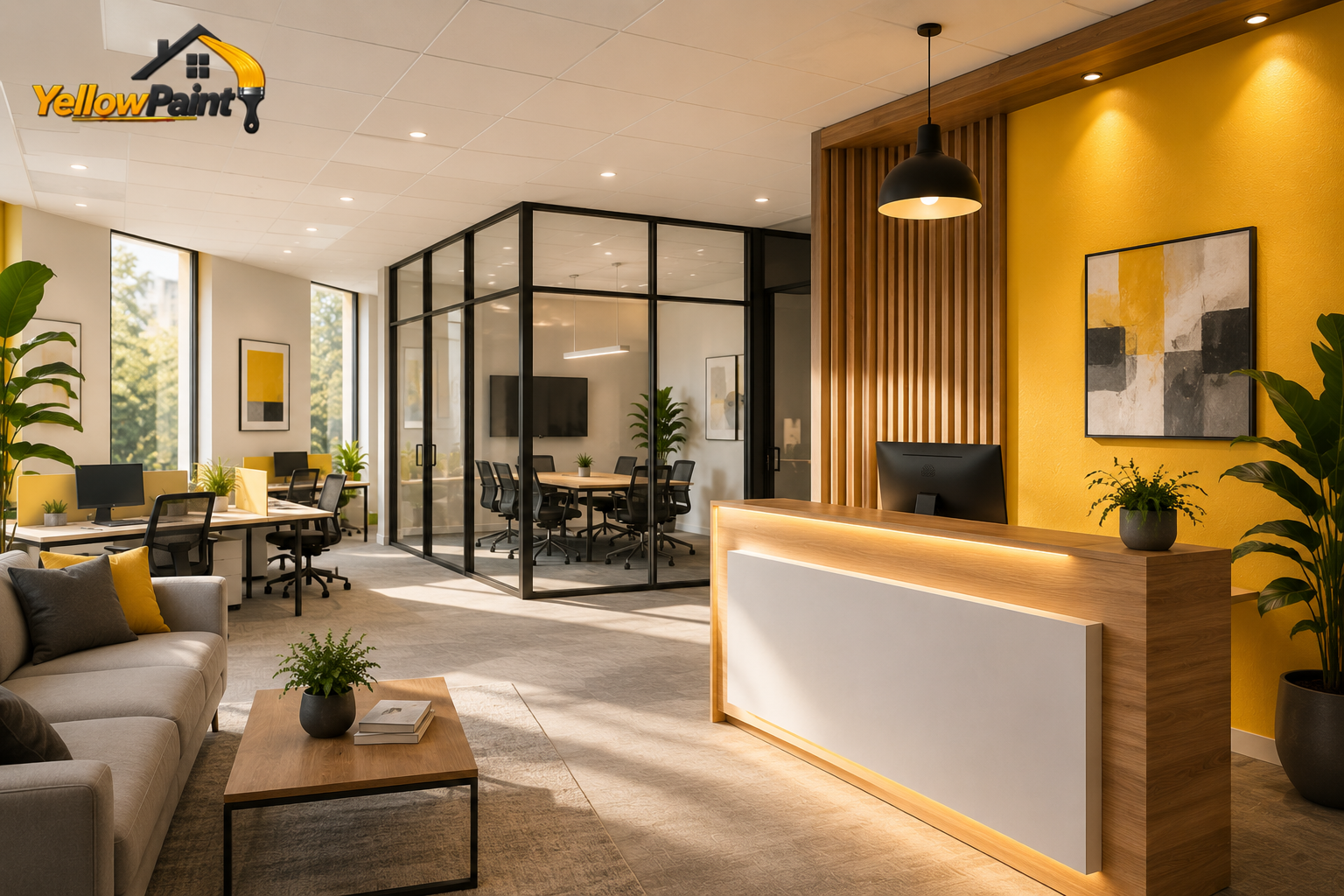
6. Make the Reception Area a Priority
The reception area is often the first part of your business that clients see.
It should communicate the right message before anyone says a word.
A fresh coat of paint can help create a reception area that feels:
Clean. Professional. Modern. Welcoming.
Consider using a refined neutral palette with a carefully selected accent colour that complements your branding.
The reception desk wall can also be an excellent location for your company logo or signage, creating a strong visual focal point.
7. Refresh Meeting Rooms and Conference Spaces
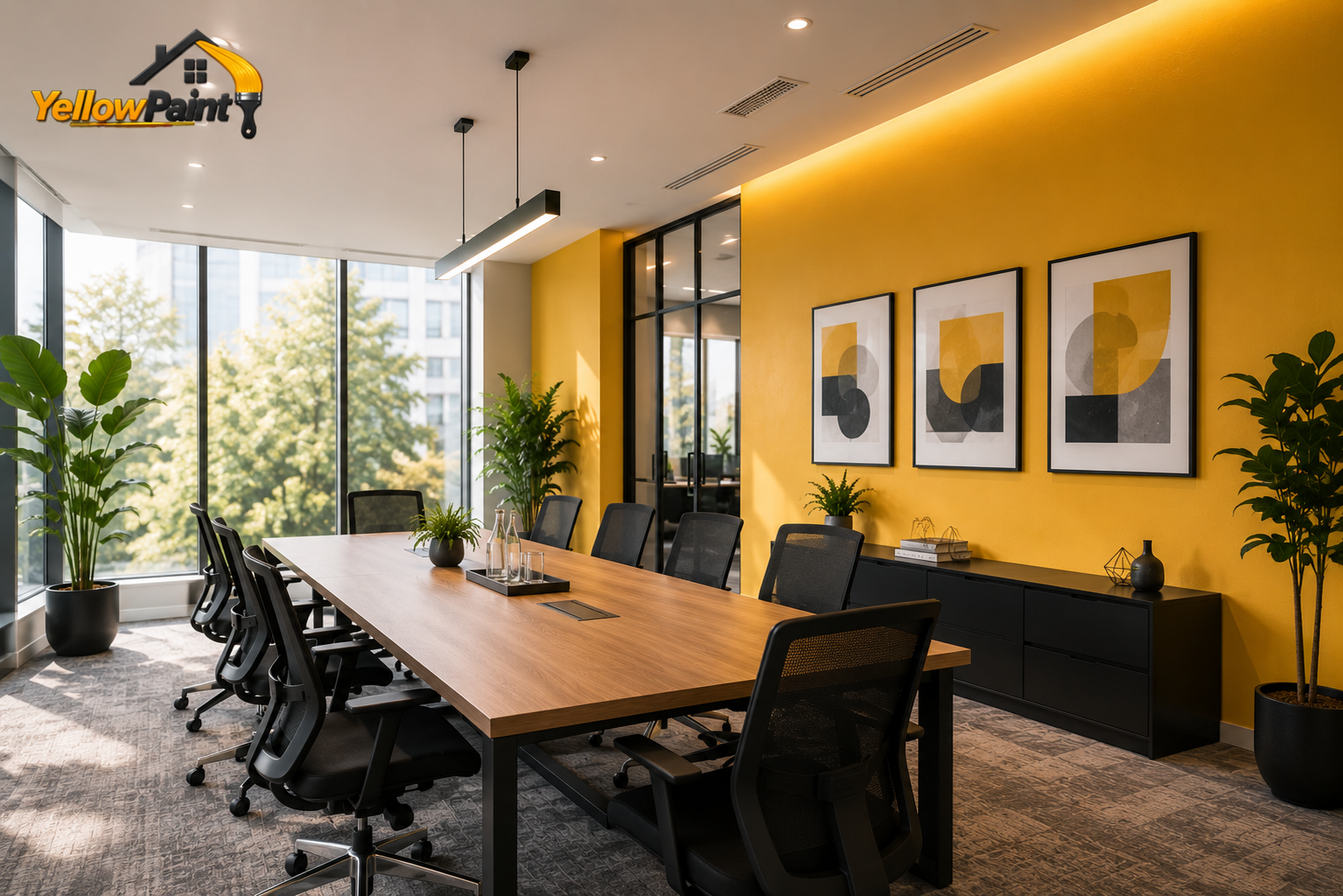
Meeting rooms should feel professional without becoming cold or uncomfortable.
Colour can help define the character of the room.
For example, a soft neutral palette can create a sophisticated setting for client meetings, while a carefully selected accent colour can give the room more personality.
When choosing colours for conference rooms, consider the furniture, flooring, lighting, presentation screens, and company branding together rather than selecting wall colour in isolation.
A well-planned office interior painting project should consider how each room works as part of the larger workplace.
8. Don’t Forget Doors, Trim, and Other Details
A professional office repaint is not always limited to four walls.
Doors, frames, baseboards, trim, and other painted surfaces can become noticeably worn over time.
Even when the walls look fresh, damaged or discoloured trim can make the entire room appear older.
Depending on the scope of the project, refreshing these details can give the office a more complete and finished appearance.
Paying attention to these smaller areas is one of the details that can make professional office painting look significantly better than a rushed repaint.
9. Plan the Painting Around Your Business
One of the biggest concerns for business owners is disruption.
An office cannot always stop operating simply because it needs to be painted.
A professional commercial painting company should plan the project around the way your business operates.
Depending on the size and requirements of the project, painting may be scheduled:
- During evenings
- On weekends
- During holidays
- In phases
- One section or floor at a time
- Around employee and customer traffic
Careful scheduling can reduce disruption while allowing the painting work to be completed efficiently.
For occupied workplaces, flexible scheduling and phased commercial office painting can make the process much easier for employees and customers.
10. Protect Your Office During the Project
Professional painting is also about protecting everything that does not need to be painted.
Before work begins, furniture and equipment should be moved or properly covered. Floors should be protected, and areas such as outlets, fixtures, and other surfaces should be carefully masked when necessary.
A clean work area helps reduce the risk of accidental splashes and makes the entire project more manageable.
At the end of each work period, the workspace should be left organized and as clean as reasonably possible.
Professional Office Painting vs. DIY
Painting a small room may appear straightforward, but commercial office painting can be considerably more demanding.
Large wall areas, occupied workspaces, high ceilings, difficult access, detailed trim, scheduling restrictions, and the need for a consistent professional finish can make commercial projects more complicated than they initially appear.
Professional painters bring experience in:
- Surface preparation
- Colour selection
- Commercial-grade coatings
- Proper application techniques
- Detailed finishing
- Workplace protection
- Project scheduling
- Efficient cleanup
The goal is not simply to put paint on the wall. The goal is to produce a consistent finish while minimizing disruption to your business.
For businesses that need a polished result with minimal interruption, professional office painting services can provide a practical solution.
How Much Can a New Paint Job Change an Office?
A professional repaint does not require a complete interior renovation to make a noticeable difference.
Changing outdated wall colours, repairing damaged surfaces, refreshing trim, and introducing a modern colour scheme can make an existing office feel significantly newer.
This can be particularly useful when:
- Moving into a new commercial space
- Preparing an office for clients
- Updating an older workplace
- Rebranding a business
- Preparing a property for lease or sale
- Refreshing a workspace without major construction
In many cases, painting provides a practical way to update the appearance of a commercial space without changing its basic layout.
A Professional Finish Starts Before the First Coat
The quality of an office painting project depends on much more than the final colour.
Proper preparation, suitable products, careful application, attention to detail, and a well-organized work plan all contribute to the finished result.
At Yellow Paint, we approach office painting as a complete process rather than simply applying a new colour to the walls.
From preparing the surfaces and helping you select the right colours to protecting your workplace and completing the final details, our goal is to deliver an office that looks clean, professional, and ready for business.
Whether you need to refresh one office or repaint an entire commercial workspace, the right painting plan can give your business a noticeably better environment.
Frequently Asked Questions
What is office painting?
Office painting is the process of preparing and repainting interior surfaces in a workplace to improve appearance, protect surfaces, and create a professional environment that suits the business.
What colours are best for an office?
Neutral colours such as soft whites, warm neutrals, light greys, and beige can create a professional and timeless appearance. Soft blues and muted greens can also work well in spaces where a calm atmosphere is desired.
How often should an office be repainted?
The ideal repainting schedule depends on factors such as foot traffic, wall condition, the type of paint used, and the overall appearance of the workplace. Offices with heavy daily use may require more frequent touch-ups or repainting.
How can office painting minimize business disruption?
Professional painters can schedule work during evenings, weekends, holidays, or quieter periods. Larger projects can also be completed in phases or one section at a time to help keep the business operating.
Why hire professional office painting services?
Professional painters can handle surface preparation, colour planning, commercial-grade coatings, detailed application, workplace protection, scheduling, and cleanup. This can help businesses achieve a consistent finish while minimizing disruption.
Ready to Give Your Office a Fresh New Look?
A professional-looking office can make a stronger impression on clients, create a more inviting environment for employees, and give your business a refreshed appearance.
If your office walls are looking tired, outdated, or simply no longer reflect your business, Yellow Paint can help you plan the next step.
Contact Yellow Paint today to discuss your office painting project and request a professional estimate.

Comments (2)
Riva Collins
It’s no secret that the digital industry is booming. From exciting startups to need ghor
global and brands, companies are reaching out.
Oliva Jonson
It’s no secret that the digital industry is booming. From exciting startups to need ghor global and brands, companies are reaching out.